 Fr

Knowing how to identify wax authentique is not always as easy as it may seem. With the wide variety of printed fabrics available today, it can be difficult to distinguish a high-quality wax fabric from an imitation or a printed textile simply marketed as wax. Fortunately, several characteristics can help you assess a fabric before purchasing it, including its printing, texture, colors, finish, label, and overall quality.
Wax fabric holds an important place in African fashion. Its vibrant patterns, strong contrasts, and versatility make it a popular choice for dresses, shirts, skirts, jackets, matching outfits, and accessories. However, not every colorful fabric with African-inspired patterns is necessarily wax, and not every fabric sold under the name “wax” has the same characteristics.
Knowing how to recognize wax authentique can therefore help you make a more informed purchase, especially when you are looking for fabric to create a garment for everyday wear, a celebration, or a special ceremony.
In this article, we explore the main characteristics to examine when buying wax fabric and explain how to identify important clues that can help you distinguish authentic wax from other printed textiles.
Why Is It Important to Recognize wax authentique?
Before learning how to identify wax authentique, it is useful to understand why the distinction matters. The textile market now offers a very wide range of colorful printed fabrics. Some look remarkably similar to traditional wax fabric but may differ in terms of composition, printing technique, texture, durability, or finish.
The word “wax” is now widely used in fashion. In some contexts, it is used broadly to describe fabrics featuring African-inspired patterns. However, a printed fabric is not automatically wax.
The distinction can be particularly important if you are investing in fabric for a garment that you want to keep and wear repeatedly. The quality of the textile can affect how the finished garment looks, how the fabric behaves during sewing, how well the colors remain visible, and how it responds to washing and regular use.
Recognizing wax authentique is therefore not simply about looking for beautiful colors. It requires observing several characteristics together.
How to Recognize wax authentique Through the Printing?
Printing is one of the first characteristics to examine when trying to recognize wax authentique. Traditional wax fabrics are associated with distinctive printing techniques that give their patterns a strong visual presence.
When you look closely at the fabric, the patterns should generally appear clearly defined. The outlines, colors, and different areas of the design should have a relatively controlled appearance.
The printing process can also produce subtle variations or visual effects that contribute to the fabric’s distinctive character.
However, one irregularity should never be considered absolute proof of authenticity. Modern textile manufacturing involves many different techniques, and manufacturers can produce fabrics with very different appearances.
Printing should therefore be treated as one clue among several rather than as the only test.
Examine Both Sides of the Fabric
Another useful step is to look at how the pattern appears on both sides of the fabric. Depending on the type of wax and the manufacturing process, the colors and patterns can remain visible with significant intensity on both sides.
This does not necessarily mean that both sides will look exactly the same. There may be differences in intensity, but the pattern should generally remain recognizable.
Some printed fabrics, on the other hand, may have one highly colorful side and another side that is considerably paler. This does not automatically mean that the fabric is an imitation, but it is a characteristic worth considering alongside other factors.
How to Recognize wax authentique Through Its Texture?
Texture is another useful indicator. Wax authentique is generally associated with fabric that has a certain density and structure.
When you hold the fabric between your fingers, pay attention to how it feels. Its weight, firmness, smoothness, and flexibility can provide useful information.
However, firmness should not automatically be interpreted as superior quality. A very stiff fabric is not necessarily better than a softer one. The final texture can depend on the cotton, manufacturing process, finishing treatment, and intended use.
The purpose of examining the texture is mainly to identify obvious differences. A fabric that feels extremely thin, fragile, or unusually lightweight may deserve additional examination before purchase.
Can Texture Alone Prove Authenticity?
No. Texture by itself cannot definitively prove that a fabric is authentic wax.
It can nevertheless complement other indicators. Experienced textile professionals, tailors, and fabric sellers can often notice differences by comparing several fabrics directly.
For beginners, one of the best ways to develop this skill is to handle different fabrics side by side. Over time, comparing their weight, density, flexibility, and surface texture can make differences easier to recognize.
How to Recognize wax authentique Through Its Colors?
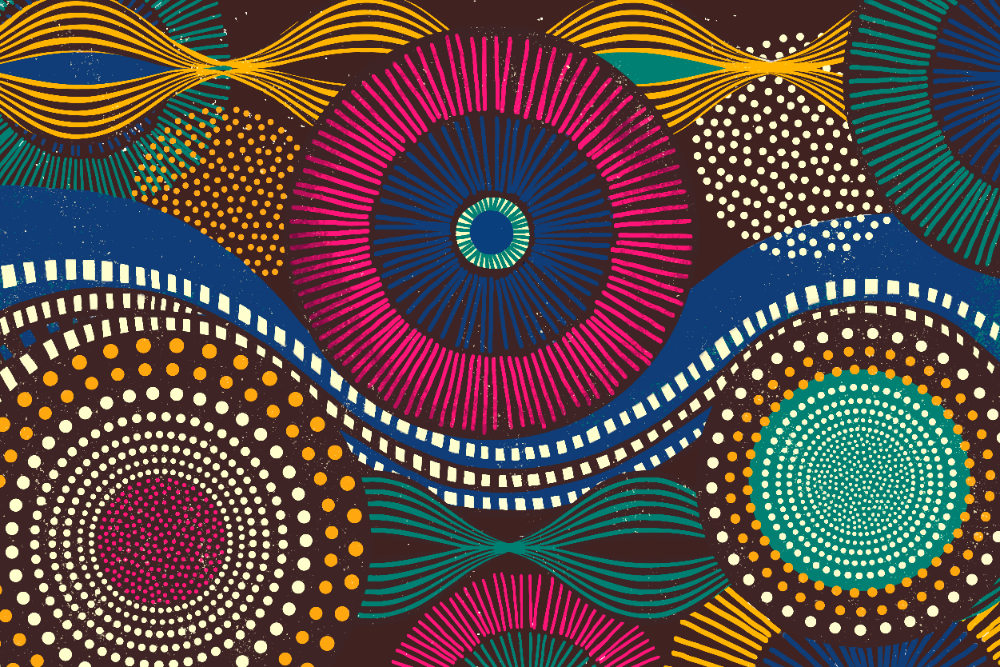
Colors are among the most visible characteristics of wax fabric. Wax authentique is often associated with strong, vibrant colors and striking contrasts.
A single pattern may combine red, yellow, green, blue, orange, purple, pink, or brown. These combinations contribute to the distinctive visual identity of wax fabric.
However, vibrant colors alone do not prove authenticity. Modern printed textiles can also reproduce very bright and attractive colors.
Instead, examine how the colors interact with the pattern. Look at the sharpness of the outlines, the consistency of the colors, and the overall quality of the print.
Does Color Bleeding Mean the Wax Is Fake?
Not necessarily. Color behavior depends on the dyes, manufacturing process, washing conditions, and fabric quality.
Some degree of color change can occur with many textiles, particularly when they are washed incorrectly.
However, significant or premature fading can be a reason to examine the fabric’s quality more carefully. Always follow the care instructions provided by the manufacturer whenever they are available.
How Can You Check the Label of wax authentique?
The label is one of the most practical elements to examine when trying to identify wax authentique. Depending on the manufacturer, the label may provide useful information about the product.
It may include the brand name, fabric composition, product reference, dimensions, manufacturing information, or care instructions.
A recognized brand can also make it easier to identify a specific textile. Some manufacturers use distinctive labels, packaging, or product references to differentiate their fabrics.
For this reason, it is better not to choose a fabric based solely on its pattern. When possible, examine the packaging and product information before making your purchase.
Why Does the Brand Matter?
The brand can provide additional information about the origin and characteristics of the fabric. However, a label should not automatically be treated as absolute proof of authenticity.
Counterfeit products can sometimes reproduce visual elements of recognized brands. It is therefore safer to combine label information with other observations, particularly when making a significant purchase.
How to Recognize wax authentique Through Its Overall Finish?
The overall finish of the textile can also provide valuable clues. A quality wax authentique should generally have a well-controlled print and a coherent fabric structure.
When examining a piece of fabric, look closely at the edges, patterns, and consistency of the print. Significant or repeated defects may indicate that the fabric deserves closer examination.
It is also useful to inspect the textile for visible flaws. Small imperfections can occur in many fabrics, but major or repeated defects may affect the quality and appearance of the finished garment.
The finish should always be evaluated according to the specific fabric and manufacturer rather than according to one universal rule.
Can the Price Help You Recognize wax authentique?
Price can be an indicator, but it cannot independently prove that a fabric is wax authentique.
A very low price may attract attention, particularly when a seller describes the product as high-quality wax. However, a high price does not automatically guarantee authenticity either.
Prices can vary depending on the brand, fabric quality, production process, dimensions, distribution network, and commercial positioning.
Price should therefore be treated as additional context rather than definitive proof. If an offer appears unusually different from comparable products, it may be worth asking additional questions about the fabric.
wax authentique vs. Imitation: What Differences Should You Look For?
Direct comparison is often one of the most effective ways to learn how to recognize wax authentique.
Place several fabrics next to one another and examine their density, texture, colors, printing quality, and overall finish. Differences can become much easier to see when fabrics are compared directly.
An imitation may reproduce a familiar pattern while having a noticeably different texture. It may also be lighter, less resistant to color fading, or produced using a different printing technique.
However, it is important not to make a conclusion based on a single characteristic. Modern textile manufacturing is highly diverse, and some fabrics can look extremely similar.
Learn to Recognize Different Fabric Qualities
With experience, it becomes easier to notice differences between different types and qualities of printed fabrics.
Tailors, fabric professionals, and specialized retailers often develop this ability through regular exposure to a wide range of textiles.
For consumers, the best approach is to observe, touch, compare, and ask questions. Purchasing from specialized textile sellers can also make the process easier because they are more likely to provide information about brands, references, and fabric characteristics.
Where Can You Buy wax authentique?
The choice of seller is particularly important when looking for wax authentique. Specialized African fabric stores can be a useful starting point because they may offer a wider selection of recognized brands and provide information about different textile references.
Markets and general clothing stores may also sell wax fabric, but the selection can be more varied. In these situations, checking labels, composition, printing, and fabric characteristics becomes even more important.
For online purchases, photographs can help you evaluate patterns and colors, but they cannot fully communicate texture, weight, or fabric density.
Product descriptions, composition details, dimensions, brand information, and seller transparency therefore become particularly valuable when shopping online.

Common Mistakes to Avoid When Buying wax authentique
One of the most common mistakes is assuming that a fabric with an African-inspired pattern is automatically wax authentique. Many textiles now use African-inspired designs without being traditional wax fabric.
Another mistake is relying exclusively on price. As discussed earlier, neither a high price nor a low price automatically proves authenticity.
It is also better not to judge a textile exclusively from a photograph. Lighting, camera settings, image processing, and screen displays can all affect how colors appear.
Finally, purchasing without checking the composition, manufacturer information, or product reference can make it much harder to evaluate what you are actually buying.
How to Recognize wax authentique Step by Step?
To recognize wax authentique, it is better to take a comprehensive approach. Start by examining the pattern and printing quality. Then look at both sides of the fabric and pay attention to its texture, weight, and density.
Next, check the label and packaging whenever available. If a brand name or product reference is provided, look for information that can help identify the specific textile.
Finally, compare the fabric with other products and consider the seller, price, product description, and overall presentation.
This method is more reliable than relying on a single visual characteristic.
With regular practice, examining different fabrics will gradually help you develop a better understanding of the differences between wax and other printed textiles.
FAQ About wax authentique
1. How can you recognize wax authentique?
To recognize wax authentique, examine several characteristics together, including printing quality, the appearance of both sides, texture, density, colors, labels, brand information, and overall finish. No single characteristic is always enough to guarantee authenticity.
2. Are all African-inspired printed fabrics wax?
No. Many fabrics use African-inspired patterns without necessarily being wax. The pattern alone cannot reliably identify the type of textile.
3. Does authentic wax have to be expensive?
Not necessarily. Price depends on brand, quality, distribution, dimensions, and other commercial factors. A high or low price alone does not prove authenticity.
4. How can you avoid buying fake wax?
To reduce the risk, check the fabric composition, label, printing quality, texture, and seller reputation. Comparing different fabrics and asking precise questions about the product can also help you make a more informed choice.
Conclusion
Learning how to recognize wax authentique mainly requires careful observation. Colors, patterns, texture, density, printing, labels, and overall finishing are all useful clues that can help you assess a fabric.
However, it is important not to rely on only one characteristic. Bright colors do not automatically prove authenticity, just as a high price does not automatically guarantee superior quality. Looking at several characteristics together provides a more reliable approach.
With experience, comparing fabrics becomes much easier. Whether you are buying fabric for a dress, shirt, ceremonial outfit, skirt, jacket, or accessory, taking the time to examine the textile carefully can help you better understand what you are purchasing and choose a fabric suited to your project.
If you enjoyed this article, discover more articles on our Blog page or follow us on Facebook so you don’t miss anything.