
 Fr
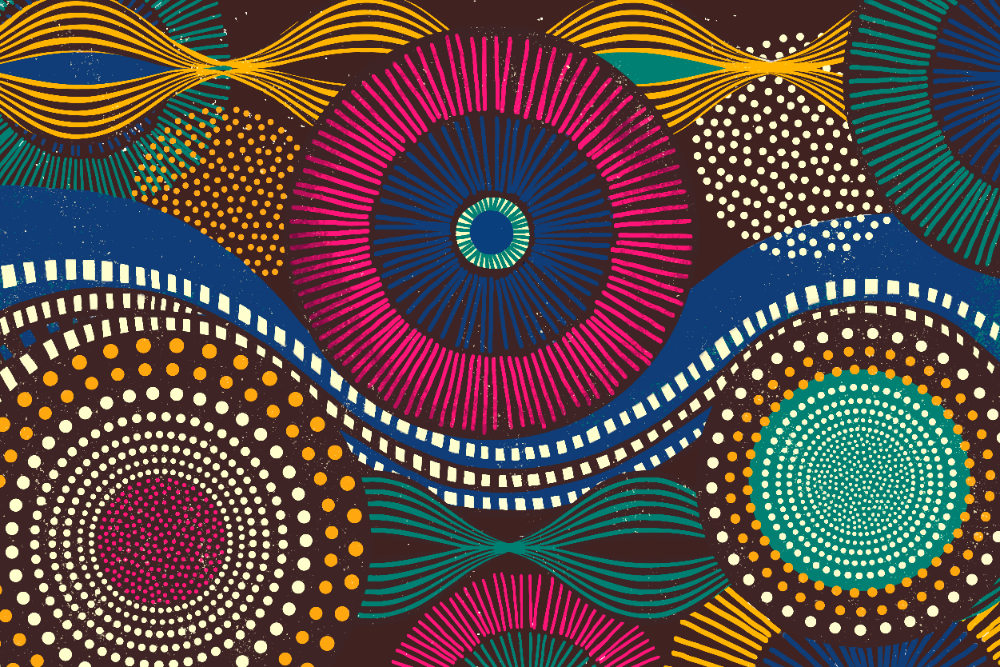

Wax in urban fashion has become an undeniable phenomenon. Long seen as a textile reserved for traditional and ceremonial attire, wax has now established itself as a central element in the contemporary streetwear wardrobe. It represents a successful fusion between African cultural heritage and modern sartorial expression.
This movement goes beyond style—it reflects a deep change in how young people, both in Africa and across the diaspora, claim their identity. How did wax find its place in the streets of the world’s major cities? And how does it manage to reconcile past and present in a bold, socially conscious visual language? This article takes you into the vibrant world of wax in urban fashion, where tradition is reimagined through a distinctly modern aesthetic.
Wax in Urban Fashion: An Act of Identity Reappropriation
The success of wax in urban fashion is closely tied to a need for cultural reappropriation. Since the 2010s, a wave of young African and Afro-descendant designers has sought to rethink fashion codes by integrating textiles from their heritage.
Wearing wax in an urban space is a statement. It’s about affirming one’s identity, one’s roots, but also one’s originality in an often standardized environment. Wax becomes a storytelling tool—a symbolic canvas through which individuals can express their origins, struggles, and creativity.
By choosing wax, these designers offer a powerful alternative to the dictates of fast fashion. They inject meaning into everyday clothing, restoring the African fabric to a central place in the global fashion conversation.

Urban Cuts to Reinvent Wax
A key element in the integration of wax into urban fashion lies in the transformation of its cuts. Gone is the static image of the traditional boubou or wrapper: wax now adapts to streetwear codes.
It can be found on staple pieces such as hoodies, joggers, bomber jackets, caps, sneakers, and fanny packs. Translating wax into modern shapes allows it to reach a young, urban audience often seeking a style that is both bold and culturally rich.
This modernization of cuts doesn’t dilute the message—on the contrary, it strengthens the contrast between past and present, tradition and rebellion. In this context, wax becomes a chameleon fabric, capable of embracing all forms of contemporary stylistic daring.
Wax in Urban Fashion: A Committed Style
More than just a fashion trend, wax in urban fashion is also a political stance. It symbolizes the pride of wearing a textile born of African craftsmanship—often marginalized in the global fashion industry.
Through wax, many young designers denounce the colonial practices still visible in textile production, such as the fact that much of the wax sold in Africa is manufactured in Europe or Asia. By refocusing production in Africa and promoting local artisans, these urban fashion actors contribute to a dynamic of economic and cultural reappropriation.
Wearing wax in the streets of Paris, Lagos, New York, or Douala thus becomes a militant act—a silent cry for greater equity, diversity, and visibility in the fashion world.
The Rise of Afro-Street Brands and Designers
The success of wax in urban fashion would be nothing without the talent of numerous creators who have made it their stylistic signature. Brands such as Maison Château Rouge (France), Rich Mnisi (South Africa), Tongoro (Senegal), and Daily Paper (Netherlands) have skillfully merged wax with urban codes to win over an international audience.
These designers don’t just place African patterns on streetwear garments—they conceptualize each piece as a hybrid creation, halfway between homage and innovation. Their success on the global stage proves that wax can be cutting-edge, avant-garde, and commercially viable.
Through these brands, wax in urban fashion gains legitimacy, prestige, and universality.
Wax: An Endless Canvas for Creation
The aesthetics of wax are defined by repetitive, geometric, often colorful, and symbolic patterns. This graphic richness makes it an unlimited medium of expression for urban fashion designers.
Each pattern tells a story—some express love, others femininity, royalty, struggle, or memory. In an urban context, these meanings take on a new dimension, fitting into a modern backdrop and speaking both to the eye and the heart.
This ability of wax to communicate visually and to spark curiosity makes it a true language of the streets. Whether in working-class neighborhoods or in the most prestigious fashion galleries, wax in urban fashion stands as a textile dialect in its own right.
When the Street Inspires High Fashion
The rise of wax in urban fashion has also influenced luxury and haute couture. Houses like Dior, Stella Jean, and Burberry have incorporated wax into their collections, often in collaboration with African designers or artists.
This recognition from the luxury industry helps legitimize wax as a noble textile worthy of the runway. It also reflects a broader trend toward the decolonization of fashion—where African references are no longer seen merely as exotic or anecdotal, but as central, visible, and valued.
The street thus becomes the new laboratory of ideas shaping the future of fashion. And in this laboratory, wax in urban fashion holds a place of honor.
Conclusion: Wax in Urban Fashion as a Global Fashion Language
Ultimately, wax in urban fashion is much more than the blending of a traditional fabric with a contemporary style. It is a cultural manifesto, an act of resistance, and an ode to creativity and pride in one’s identity.
It proves that it’s possible to reconcile roots and modernity, craftsmanship and innovation, street and elegance. Wax has not only found its place in the wardrobes of younger generations—it has established itself as a powerful symbol of their relationship with the world, memory, and the future.
Wearing wax in an urban context is not just about getting dressed—it’s about communicating, claiming, and creating. And that is precisely what makes wax in urban fashion a profound, lasting, and irresistibly stylish movement.